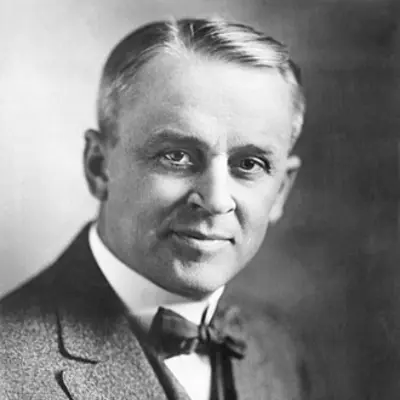

Imagine trying to weigh the smallest possible pinch of electricity. That’s essentially what Robert Millikan achieved between 1909 and 1913. By watching microscopic oil droplets float in an electric field, Millikan precisely measured the fundamental unit of electricity: the charge on one electronElectronA fundamental subatomic particle with a negative electric charge, found in all atoms. full glossary entry .
Before Millikan’s work, scientists knew that the electron existed. J.J. Thomson had discovered this tiny, negatively charged particle in 1897. Thomson’s experiments showed that electrons were a component of all atoms. However, while he could determine the ratio of an electron’s charge to its mass, no one had yet measured the actual value of its charge. Knowing this value was crucial for understanding the structure of atoms and the nature of electricity itself.
Millikan’s ingenious experiment provided the answer. He used a simple yet precise setup. First, he sprayed a fine mist of oil into a chamber. As these tiny oil droplets formed, they often picked up a small amount of electric chargeElectric ChargeA fundamental property of matter that causes it to experience a force when placed in an electromagnetic field. It can be positive or negative. full glossary entry due to friction or by interacting with X-rays. This meant some droplets gained or lost electrons, making them electrically charged.
These charged droplets then fell through a small hole into a second chamber. This lower chamber contained two parallel metal plates, one above the other. Millikan could connect these plates to a battery, creating an electric fieldElectric FieldA region of space around an electrically charged particle or object within which a force would be exerted on other electrically charged particles or objects. full glossary entry between them. An electric field is a region around a charged object where other charged objects will experience a force. By adjusting the voltage of the battery, Millikan could control the strength of this field.
He then observed individual oil droplets through a microscope. Each droplet was subject to two main forces. Gravity pulled the droplet downwards. The electric field, when activated, could push the charged droplet upwards. If the droplet had a negative charge, and the top plate was positive while the bottom plate was negative, the electric field would exert an upward force on the droplet, opposing gravity.
Millikan carefully adjusted the electric field’s strength until a chosen oil droplet hung perfectly still, suspended in mid-air. At this point, the upward electrical force exactly balanced the downward gravitational force. Knowing the strength of the electric field, the mass of the oil droplet (which he calculated from its size and density), and the acceleration due to gravity, Millikan could then calculate the exact electric charge on that specific droplet.
He repeated this process hundreds of times, measuring the charges on many different oil droplets. The result was striking. He found that the charge on every single droplet was not random. Instead, it was always a whole-number multiple of a very tiny, specific value. For example, a droplet might have a charge of X, or 2X, or 3X, but never 1.5X or 2.7X.
This smallest, indivisible unit of charge, X, was the elementary chargeElementary ChargeThe magnitude of the electric charge of a single proton or electron. It is the smallest possible amount of free electric charge. full glossary entry . Millikan concluded that this elementary charge must be the charge carried by a single electron. His experiments showed that electric charge is not a smooth, continuous quantity. Instead, it comes in discrete, fixed “grains” or packets, a concept known as the quantization of chargeQuantization of ChargeThe principle that electric charge does not exist in arbitrary amounts but only in discrete, integer multiples of the elementary charge. full glossary entry .
Millikan’s precise measurement of the electron’s charge (approximately 1.602 x 10^-19 coulombs) was a monumental achievement. It provided a fundamental constant that anchored measurements across all of atomic physics. Knowing the electron’s charge allowed scientists to calculate other crucial atomic properties, such as the mass of the electron itself and Avogadro’s number (the number of atoms or molecules in a mole of a substance). While some historical analysis has noted questions about Millikan’s data selection process, the core result of a fundamental, quantized unit of electric charge has been repeatedly confirmed by subsequent experiments and remains a cornerstone of modern physics. It gave us a precise understanding of the fundamental unit of electricity, revealing the grainy nature of charge that underpins our understanding of the universe.